
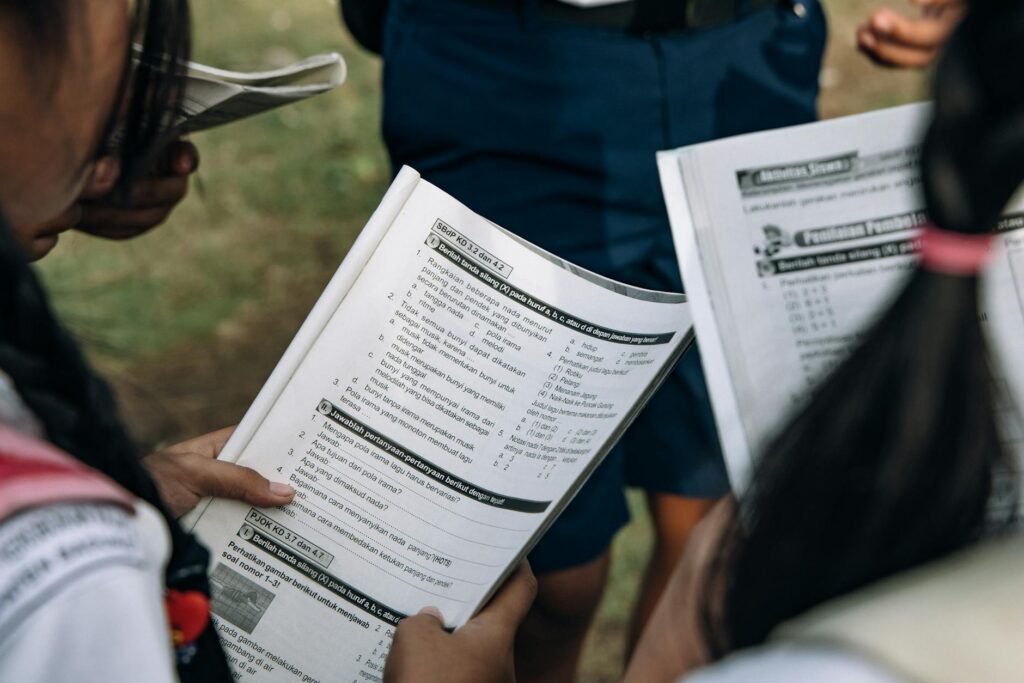
The West Bengal Civil Service (WBCS) Examination is conducted by the West Bengal Public Service Commission (WBPSC) to recruit candidates for various Group A, Group B, Group C, and Group D posts in the West Bengal state government. The WBCS exam is one of the most prestigious and competitive examinations in West Bengal, with lakhs of candidates appearing every year.
Understanding the complete syllabus and exam pattern is the first step toward cracking this exam. This article provides the detailed subject-wise syllabus for both WBCS Prelims and Mains, along with the exam pattern, marking scheme, and preparation strategies.
WBCS Exam Pattern 2026
The WBCS examination is conducted in three stages:
Stage 1: Preliminary Examination (Screening Test)
| Parameter | Details |
|---|---|
| Type of Exam | Objective (MCQ) |
| Total Questions | 200 |
| Total Marks | 200 |
| Duration | 2 Hours 30 Minutes |
| Negative Marking | 1/3 mark deducted for each wrong answer |
| Subjects | General Studies, English, Bengali/Hindi/Urdu/Nepali/Santali, General Science, Current Affairs, History, Geography, Polity, Economy, Reasoning |
Stage 2: Main Examination (Written)
| Paper | Subject | Marks | Duration |
|---|---|---|---|
| Paper I | Bengali/Hindi/Urdu/Nepali/Santali (Compulsory Language) | 200 | 3 Hours |
| Paper II | English (Compulsory) | 200 | 3 Hours |
| Paper III | General Studies – I | 200 | 3 Hours |
| Paper IV | General Studies – II | 200 | 3 Hours |
| Paper V | Constitution of India and Indian Economy | 200 | 3 Hours |
| Paper VI | Arithmetic and Reasoning | 200 | 3 Hours |
Stage 3: Personality Test (Interview)
The personality test carries 100 marks and assesses the candidate’s awareness, communication skills, and overall personality.
WBCS Prelims Syllabus 2026 (Detailed)
1. English Composition
- Synonyms and Antonyms
- Idioms and Phrases
- Fill in the Blanks
- Correct use of Articles, Prepositions, Tenses
- Sentence Correction / Error Spotting
- One-word Substitution
- Comprehension Passages
- Vocabulary and Word Usage
2. General Science
- Physics: Units and Measurements, Motion, Laws of Motion, Work-Energy-Power, Gravitation, Sound, Light, Electricity, Magnetism, Heat and Thermodynamics, Modern Physics
- Chemistry: Atomic Structure, Periodic Table, Chemical Bonding, Acids-Bases-Salts, Metals and Non-metals, Carbon Compounds, Polymers, Everyday Chemistry
- Biology: Cell Biology, Classification of Organisms, Human Physiology (Digestive, Respiratory, Circulatory, Nervous Systems), Plant Physiology, Genetics and Evolution, Diseases and Immunity, Environmental Science
3. Current Events (National and International)
- Important National and International Events
- Awards and Honours (Bharat Ratna, Nobel Prize, National Awards)
- Sports Events and Champions
- Books and Authors
- Science and Technology Developments
- Government Schemes and Policies
- Important Days and Dates
- Recent Summits and Conferences
4. Indian History with Special Reference to Bengal
- Ancient India: Indus Valley Civilization, Vedic Period, Buddhism and Jainism, Maurya Empire, Gupta Empire
- Medieval India: Delhi Sultanate, Mughal Empire, Bhakti and Sufi Movements, Vijayanagara Empire, Bengal under Pala and Sena dynasties
- Modern India: British East India Company, Bengal Renaissance, Indian National Movement, Role of Bengal in Freedom Struggle, Swadeshi Movement, Partition of Bengal (1905), Important Leaders from Bengal (Subhash Chandra Bose, Rabindranath Tagore, Raja Ram Mohan Roy)
5. Geography of India with Special Reference to West Bengal
- Physical Geography: Solar System, Atmosphere, Lithosphere, Hydrosphere, Climate and Weather
- Indian Geography: Physical Features, Rivers, Climate, Soil Types, Natural Vegetation, Agriculture, Mineral Resources, Industries, Transport
- West Bengal Geography: Physiographic Divisions (North Bengal Plains, Rarh Region, Coastal Plains, Sundarbans), Rivers (Ganga, Hooghly, Teesta, Damodar), Climate, Agriculture (Rice, Jute, Tea), Industries, Population Distribution
6. Indian Polity and Economy
- Polity: Indian Constitution, Preamble, Fundamental Rights, Directive Principles, Union and State Government, Parliament, Judiciary, Panchayati Raj, Local Self Government, Election Commission, Constitutional Bodies
- Economy: Five Year Plans, NITI Aayog, Banking and Finance, Inflation, GDP and National Income, Poverty and Unemployment, Fiscal Policy, Monetary Policy, Foreign Trade, Economic Reforms, Budget and Taxation
7. Indian National Movement
- Early Resistance and Tribal Revolts (Santhal Rebellion, Indigo Revolt)
- Formation of Indian National Congress
- Moderate and Extremist Phases
- Gandhian Era (Non-Cooperation, Civil Disobedience, Quit India)
- Revolutionary Movements
- Role of Women in Freedom Struggle
- Independence and Partition
8. Mental Ability and Reasoning
- Analogy, Series Completion, Coding-Decoding
- Blood Relations, Direction Sense
- Logical Venn Diagrams, Syllogisms
- Statement and Conclusion
- Data Interpretation (Tables, Bar Graphs, Pie Charts)
- Number Series, Arithmetic Reasoning
WBCS Mains Syllabus 2026 (Detailed)
Paper I: Compulsory Language (Bengali/Hindi/Urdu/Nepali/Santali)
- Essay Writing (descriptive, argumentative, narrative)
- Precis Writing
- Comprehension and Summary
- Translation (English to Vernacular and vice versa)
- Grammar and Usage
- Letter Writing (formal and informal)
Paper II: English
- Essay Writing on current topics
- Precis Writing
- Comprehension of Unseen Passages
- Translation from Bengali/Hindi to English
- Report Writing
- Grammar: Narration, Voice Change, Transformation of Sentences, Correction of Errors
Paper III: General Studies – I
- Indian History (Ancient, Medieval, Modern with emphasis on Bengal)
- Indian Geography and World Geography
- Indian Culture and Heritage
- Science and Technology in Daily Life
- Environmental Issues and Disaster Management
Paper IV: General Studies – II
- Indian and West Bengal Economy
- Role of Science and Technology in Development
- Current National and International Events
- Statistics and Data Interpretation
- Ethics and Integrity in Public Life
Paper V: Constitution of India and Indian Economy
- Historical Background of the Indian Constitution
- Salient Features of the Constitution
- Fundamental Rights, Duties, and Directive Principles
- Union, State, and Local Government Structure
- Judiciary and Judicial Review
- Emergency Provisions
- Indian Economic Development since Independence
- Planning, Liberalization, and Globalization
- Banking, Finance, and Monetary Policy
Paper VI: Arithmetic and Reasoning
- Arithmetic: Number Systems, HCF/LCM, Percentage, Profit and Loss, Simple and Compound Interest, Ratio and Proportion, Time and Work, Time and Distance, Averages, Algebra, Geometry, Mensuration, Trigonometry
- Reasoning: Verbal and Non-verbal Reasoning, Logical Deduction, Analytical Reasoning, Data Sufficiency, Puzzles, Seating Arrangements
WBCS Preparation Tips
- Start with NCERT Books: Build your foundation with NCERT books for History, Geography, Polity, and Science (Class 6 to 12). These cover most of the Prelims syllabus.
- Focus on Bengal-specific Content: WBCS gives special emphasis to Bengal’s history, geography, and culture. Study Bengal-specific topics thoroughly.
- Practice Previous Year Papers: Solve at least 10 years of previous WBCS question papers to understand the pattern and difficulty level.
- Current Affairs is Crucial: Read newspapers daily (The Telegraph, Anandabazar Patrika) and maintain notes on important events, government schemes, and appointments.
- Time Management in Prelims: With 200 questions in 150 minutes, you get less than 1 minute per question. Practice speed with mock tests.
- Answer Writing for Mains: Practice essay and answer writing regularly. Structure your answers with introduction, body, and conclusion.
- Revision is Key: Create short notes and revise them weekly. Last-month revision should focus on weak areas and current affairs.
Important Books for WBCS Preparation
- Indian Polity by M. Laxmikanth
- History of Modern India by Bipan Chandra
- Certificate Physical and Human Geography by G.C. Leong
- Indian Economy by Ramesh Singh
- Lucent’s General Knowledge
- West Bengal General Knowledge by Upkar Prakashan
Preparing for WBCS requires a strategic approach, consistent study routine, and regular practice. Start early, cover the entire syllabus systematically, and stay updated with current affairs to maximize your chances of success.